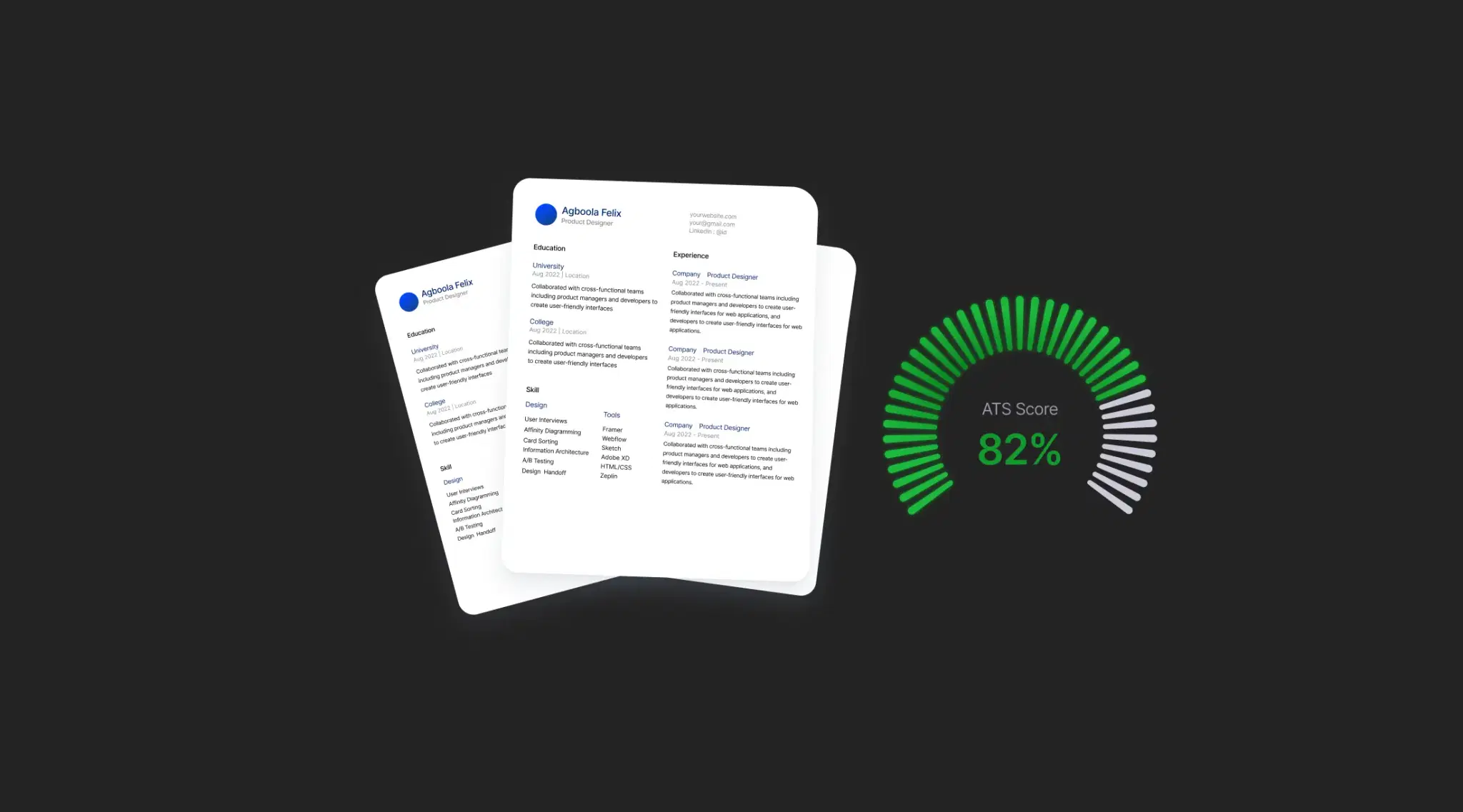
For many job seekers, the anxiety begins the moment they click "Submit Application." You'd be calmer if you knew exactly what happens from that moment. Right after you submit your resume, it enters an Applicant Tracking System (ATS), where it's processed before a recruiter ever opens it. While different ATS platforms use different technologies and features, most follow the same general workflow.
Step 1: The ATS Reads and Organizes Your Resume
The first thing an ATS does is parse your resume. Parsing simply means extracting important information from your resume and organizing it into a structured profile. Instead of seeing your resume as a formatted document, the software identifies details like your contact information, work experience, education, skills, certifications, and employment dates, then stores them in separate fields that recruiters can search later.
If your resume relies heavily on graphics, tables, or text boxes, some ATS platforms may struggle to identify your information correctly. According to a study done by Edligo on 1000 submitted resumes, 43% of the applications submitted were rejected due to parsing errors and formatting issues.
Step 2: The ATS Looks for Relevant Qualifications
Once your information has been extracted, the ATS compares it with the job requirements. Depending on the software a company uses, this comparison may include skills, job titles, certifications, years of experience, education, or other qualifications mentioned in the job description.
Step 3: Some ATS Platforms Rank or Score Candidates
Some modern Applicant Tracking Systems include ranking or match-score features that estimate how closely a candidate's resume aligns with a job description. Others simply organize resumes without assigning any score at all.
In other words, there is no single ATS algorithm. Companies use hundreds of different ATS platforms, each with its own features and capabilities. The best you can do is make your resume as ATS-friendly as possible so it scales through any ATS.
Step 4: Recruiters Search and Filter Applications
Next, the recruiters search the system using keywords, job titles, certifications, locations, or years of experience. Imagine a recruiter searching for candidates with experience in SEO, Google Analytics, and content marketing. If your resume clearly demonstrates those qualifications using language that reflects your actual experience, it's much more likely to appear in those search results. Many ATS are programmed to look for exact keyword matches.
Step 5: The hiring decision is made
Contrary to what some people believe, the ATS doesn't decide who gets hired. The final hiring decision is still made by people: first the recruiter and finally the hiring manager.
Understanding this process changes the way you should think about ATS resume optimization. The goal isn't to outsmart software or "beat the algorithm." It's to ensure your qualifications are communicated clearly enough for both the ATS and humans to understand them.